What a Medal Can't Teach Your Child (And What the Mat Does)
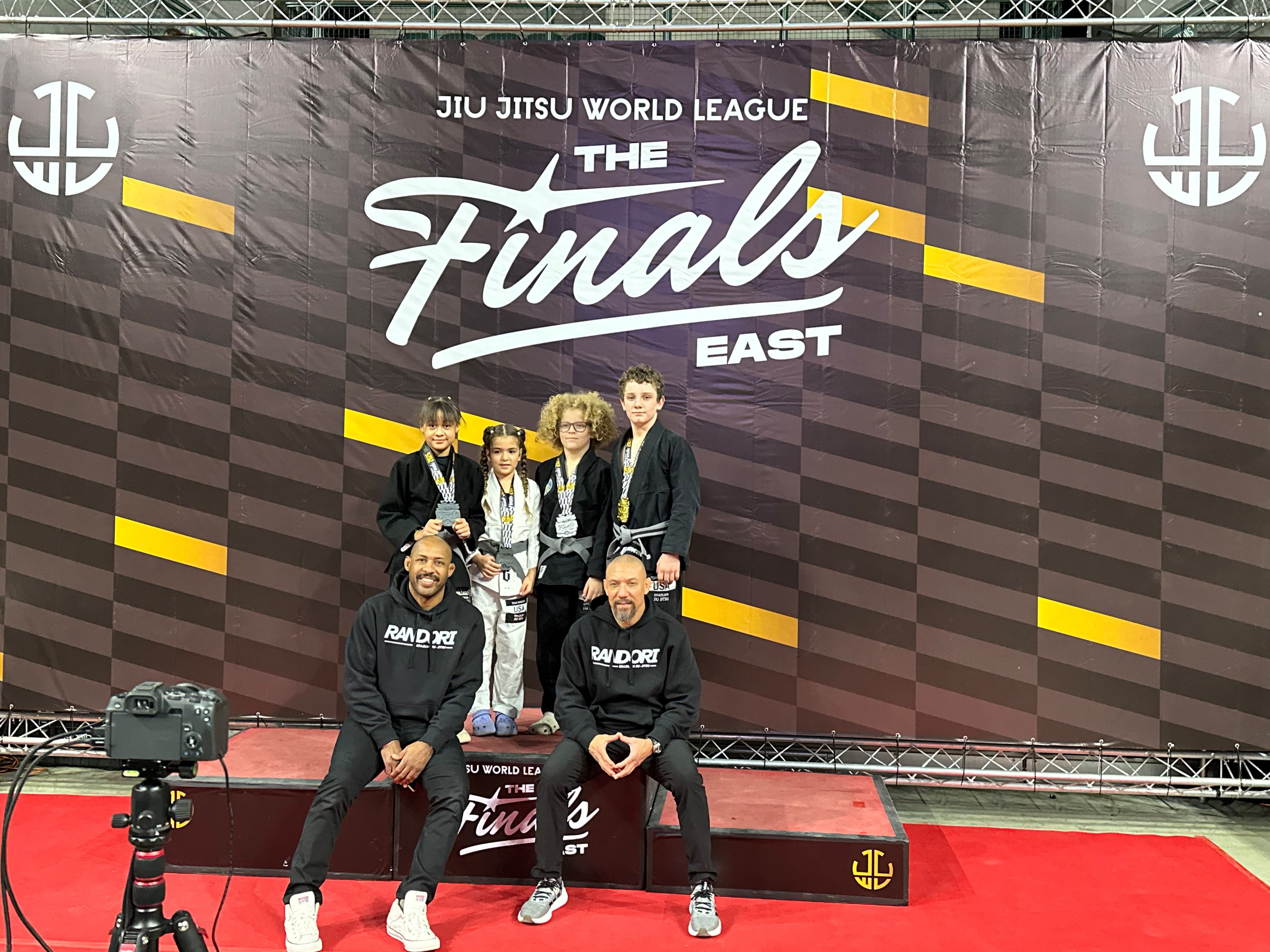
Take a close look at this photo. Four kids standing on a podium at the Jiu Jitsu World League Finals East, medals around their necks. Two coaches sitting in front of them in Randori hoodies, smiling.
It's a great picture. But here's the thing most people miss when they see it. The medals are the least important thing in the frame.
What matters is everything that happened before those kids stepped up there. The early mornings. The rounds where they got stuck on the bottom and had to find their way out. The nerves in the bullpen. The handshake before the match and the handshake after, no matter how it went.
I'm Coach Al, and I want to talk to parents today about what a tournament really teaches. Not the trophy part. The character part.
Why Parents Are Looking for More Than a Sport
Most parents who walk into our academy aren't looking for a future world champion. They're looking for something harder to find.
They want a child who can handle frustration without falling apart. A child who can look an adult in the eye. A child who doesn't quit the moment something gets hard. A child who is confident without being cocky.
Those are character traits. And character isn't built in a lecture. It's built in moments of pressure, when a kid has to choose how to respond.
Jiu-jitsu creates those moments every single class. A tournament just turns up the volume.
The Warrior's Lesson: Pressure Is a Teacher
There's an old idea in martial arts that you don't rise to the occasion. You fall to the level of your training. Kids learn this fast on the mat.
When a child walks onto a competition mat, there's a referee, a crowd, a clock and an opponent who wants the same thing they do. Their heart is pounding. Their hands might be shaking.
That feeling is not a problem. It's the lesson.
Learning to Breathe Through the Nerves
In class, we teach kids that nerves are normal. Every competitor feels them, including black belts. The goal isn't to make the feeling disappear. The goal is to keep working anyway.
We teach simple tools. Slow breaths before stepping out. A focus on one first move instead of the whole match. Hands up, posture strong, eyes forward.
These skills don't stay at the tournament. They show up before a test at school. Before a piano recital. Before a hard conversation with a friend. A child who has learned to breathe through nerves on the mat carries that calm into every arena of life.
Facing a Real Challenge, Safely
Jiu-jitsu is unique because kids can test themselves against a resisting partner with full effort, and still stay safe. There's no striking. When a position gets uncomfortable, they tap and start again.
That combination is powerful. Kids get to feel real challenge, real struggle and real effort. But they do it inside clear rules, with coaches watching every round.
Winning Well and Losing Well
Here's a truth every parent of a competitor learns: not every kid on the podium gets the top spot. In this photo, you can see silver medals and a gold. Every one of those kids had a moment that day where things didn't go their way.
That's where the real growth happens.
What Losing Teaches
A loss on the mat is honest. There's no one to blame. No bad call to hide behind most of the time. Your child knows exactly what happened, because they felt it.
We teach our students to treat a loss as information. What position did I end up in? Where did I get stuck? What do I want to work on Tuesday?
That mindset is gold for a growing child. It turns failure from something to fear into something to learn from. Kids who learn that lesson at eight or ten years old have a huge head start for the rest of their lives.
[Coach Al: add a real moment here, without names, of a student who lost a match and how they responded in the next class.]
What Winning Teaches
Winning has its own lesson, and it's just as important. We expect our kids to win with humility.
That means shaking hands. Thanking your partner. Thanking the referee. No showboating over someone who just had a tough day. The kid across from you trained hard too.
A child who learns to win gracefully becomes a teammate others want around. That carries into the classroom, the sports field and eventually the workplace.
The Team Behind the Podium
Look at the photo again. Notice the coaches sitting at the bottom of the frame. They're not standing in front of the kids. They're sitting below them, letting the kids have the spotlight.
That's on purpose. At Team Randori, the coach's job is to prepare, support and then step back. The kids did the work. They earn the moment.
Belonging to Something Bigger
One of the quiet benefits of jiu-jitsu is that kids become part of a team, even though they compete one-on-one. They cheer for each other. They warm up together. They help each other get ready.
For a lot of children, that sense of belonging is just as valuable as any skill they learn. It gives them a place where they're known, expected and supported.
Your Child Doesn't Have to Compete to Get These Benefits
Let me be clear about something. Competition is optional at Team Randori. Some kids love it. Some kids never step on a tournament mat, and that's completely fine.
Every lesson I've described happens in regular class too. Every round of live training is a small test. Every drill with a new partner is a chance to show respect. Every tough day is a chance to come back next time.
Tournaments simply let us see the growth more clearly.
What to Watch for at Home
These are the changes worth watching for over the months. More patience. Better focus. More willingness to try hard things. Calmer reactions when something doesn't go their way.
Those aren't changes we can promise on a schedule. Every child grows at their own pace. But the mat gives them the reps, week after week, to build those habits.
How to Get Started
Our kids Brazilian Jiu-Jitsu program in Annapolis runs Monday, Tuesday, Thursday, Friday and Saturday. Classes start with a focused warm-up, then move into technique and age-appropriate live training.
New families can start with our 30 Day Trial Membership, which includes a free uniform. It's open to kids ages 5 to 16. It gives your child a full month to settle in, make friends and find out whether the mat is their place.
The medal is nice. The character is what lasts.
Ready to see it for yourself? Book your child's 30 Day Trial Membership here.
