Partners, Not Opponents: How Jiu-Jitsu Teaches Kids to Compete With Kindness
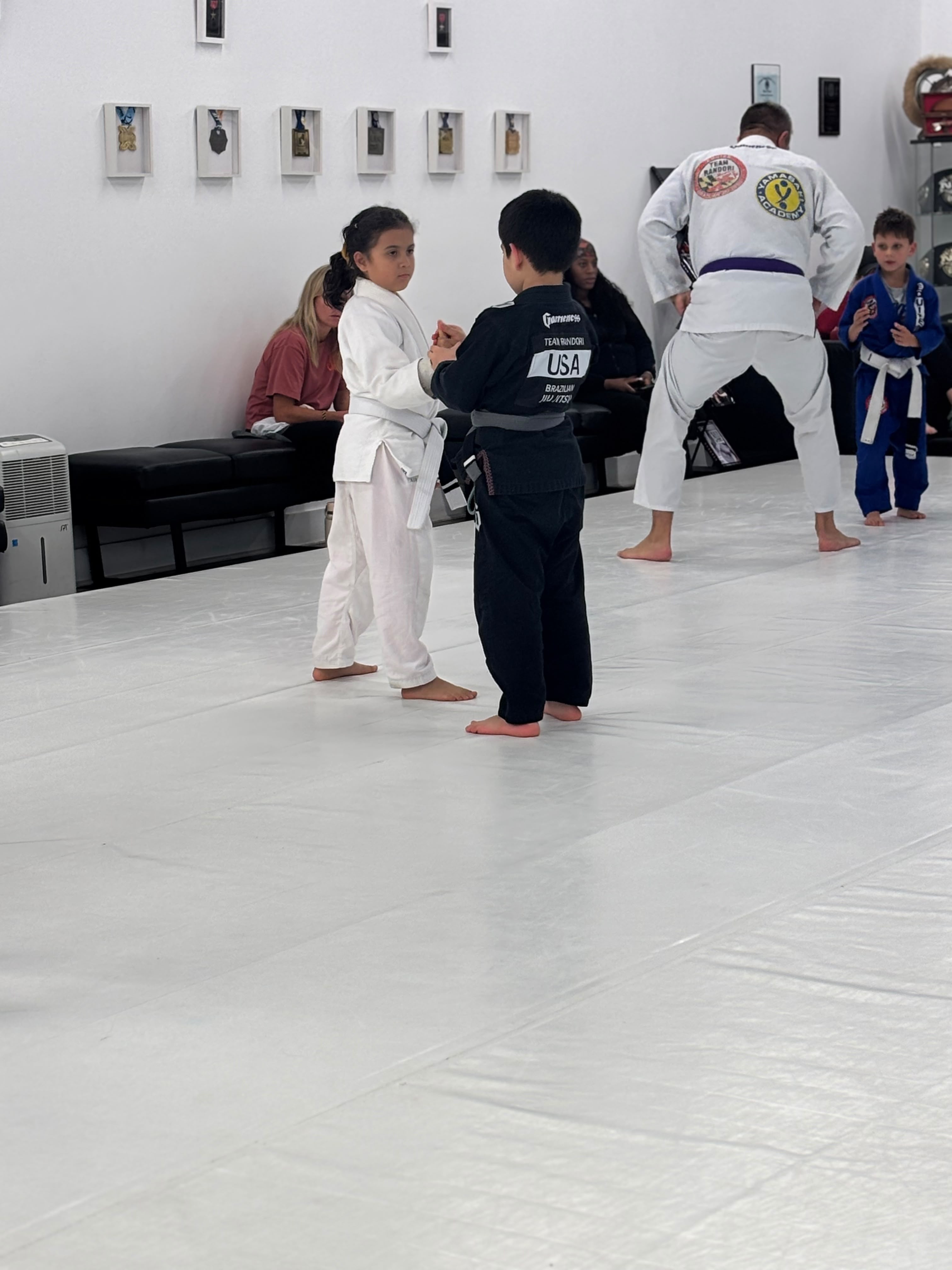
Before every round of live training at Team Randori Martial Arts in Annapolis, the same small thing happens. Two training partners face each other, slap hands, bump fists, and then try their very best to win the round.
When the round ends, they shake hands again. Often they're smiling. Sometimes one of them is helping the other up.
That simple ritual holds one of the most valuable lessons jiu-jitsu teaches kids and adults alike: you can compete as hard as you know how and still treat the other person with care. The person across from you isn't your enemy. They're your partner, and you need each other to get better.
Why We Call Them Partners, Not Opponents
Nobody improves alone
Jiu-jitsu can't be learned by yourself. Every technique needs someone to practice it on, someone to resist, and someone to show you where you made a mistake. Your partner gives you their time, their trust and their body to learn on. That deserves respect.
Kids grasp this quickly. When they realize that the person they're rolling with is the reason they're getting better, they start to see competition differently. The goal isn't to crush someone. It's to test yourself against someone who's helping you grow.
Trust is built into every round
When your child taps, their partner lets go immediately. When their partner taps, your child does the same. That's an unbreakable rule on our mat, and it's a powerful lesson in trust and responsibility. Kids learn that being strong means being trustworthy with that strength.
What Kids Learn From Partner Training
Competing with kindness
Many children struggle with competition. Some get so upset when they lose that they don't want to play anymore. Others win and rub it in. Jiu-jitsu gives kids a structured, coached place to practice the middle path: try hard, win or lose with grace, and shake hands either way.
Taking care of smaller or newer partners
Our coaches often pair experienced kids with newer ones. The experienced child learns to adjust: go a little slower, explain a move, let the new student try a technique. That's leadership and empathy in action, and it's a skill kids can carry home to younger siblings and classmates.
Handling frustration with a partner, not at a partner
Getting stuck under someone is frustrating. On our mat, kids learn that the frustration is about the position, not the person. They learn to breathe, reset and ask "What can I do differently?" instead of blaming the partner. That's a skill that will serve them in group projects, on sports teams and in friendships for the rest of their lives.
Learning to speak up for themselves
Tapping is how a jiu-jitsu student says "stop." Every child on our mat learns to tap clearly and early, and every partner learns to respect it instantly. That turns into something bigger than a safety rule. Kids practice recognizing their own limits, communicating them without embarrassment, and trusting that others will listen. Just as important, they practice being the person who listens. Respecting a clear "stop" from someone else, and expecting the same in return, is a lesson every parent wants their child to carry into the world.
Adults Need This Lesson Too
Hard training, good people
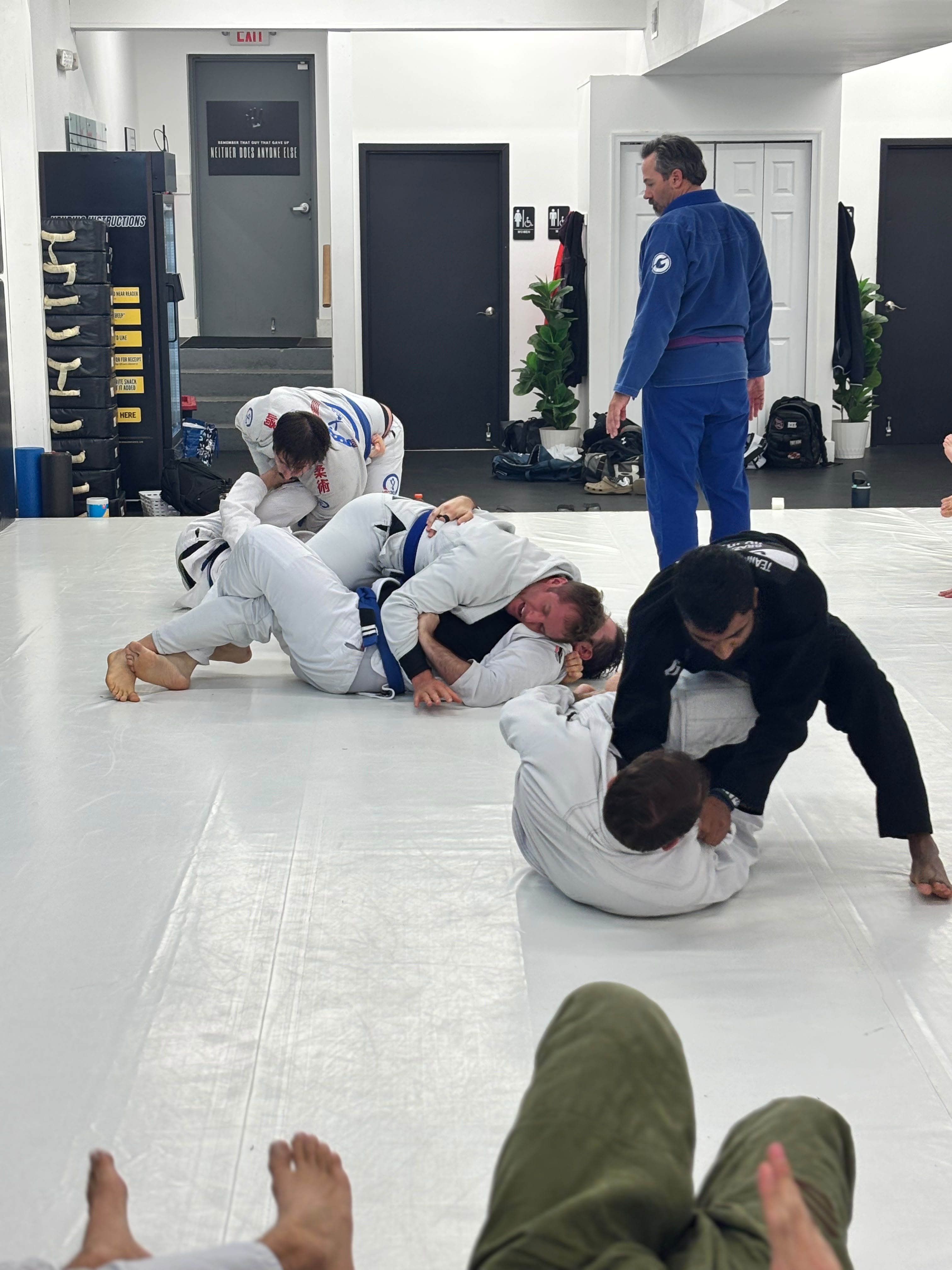
Look at the adult class above. These are grown professionals pushing each other hard, sweating, straining and working for position. And when the round ends, they'll shake hands, check in on each other and line up to do it again.
For a lot of adults, that's a rare thing. In many workplaces, competition can turn personal. On the mat, adults practice competing fully while keeping respect intact. That habit doesn't have to stay on the mat. It can change how you handle tough conversations at work and at home.
Ego left at the door
Every adult who trains will get tapped by someone smaller, younger or newer at some point. The mat teaches humility fast. The best training partners are the ones who can laugh at that, learn from it and help the next person improve. That kind of humility is a quiet strength, and kids notice when the adults around them have it.
Sportsmanship That Carries Off the Mat
Parents often ask what "character development" actually looks like in real life. Partner training is one of the clearest answers. Over time, children who train regularly learn to:
- Look someone in the eye and shake their hand, before and after a challenge.
- Win without bragging and lose without blaming.
- Use their strength responsibly, knowing when to stop.
- Help others improve, even when they're the more experienced one.
- Trust and be trusted by the people around them.
Those are the traits printed on the mirror in our academy: Confident, Disciplined, Resilient and Respectful. Partner training puts all four into practice every single class.
How Parents Can Reinforce It
- Ask who they trained with. "Who was your partner today? What did you learn from them?" puts the focus on connection, not just results.
- Model good sportsmanship. How you react to your child's wins and losses, and to your own, teaches more than any rule.
- Celebrate kindness. When your child helps a newer student or shakes hands after a tough loss, point it out. That's the win that matters.
- Consider training yourself. Our adult classes give you a chance to learn the same lessons alongside your child.
Start the Partnership
The handshake before the roll is a small thing. Repeated week after week, it becomes part of who your child is: someone who competes hard, plays fair and treats people well.
Team Randori Martial Arts offers a 30 Day Trial Membership for kids and adults, and every new student receives a free BJJ uniform the day they start. Kids classes run Monday, Tuesday, Thursday, Friday and Saturday. Adult Beginner classes run Tuesday and Thursday evenings, and Ladies Only classes run Monday, Wednesday and Friday evenings.
Book your first class at Team Randori and come meet your new training partners.
See you on the mat,
Coach Al
Team Randori Martial Arts, Annapolis